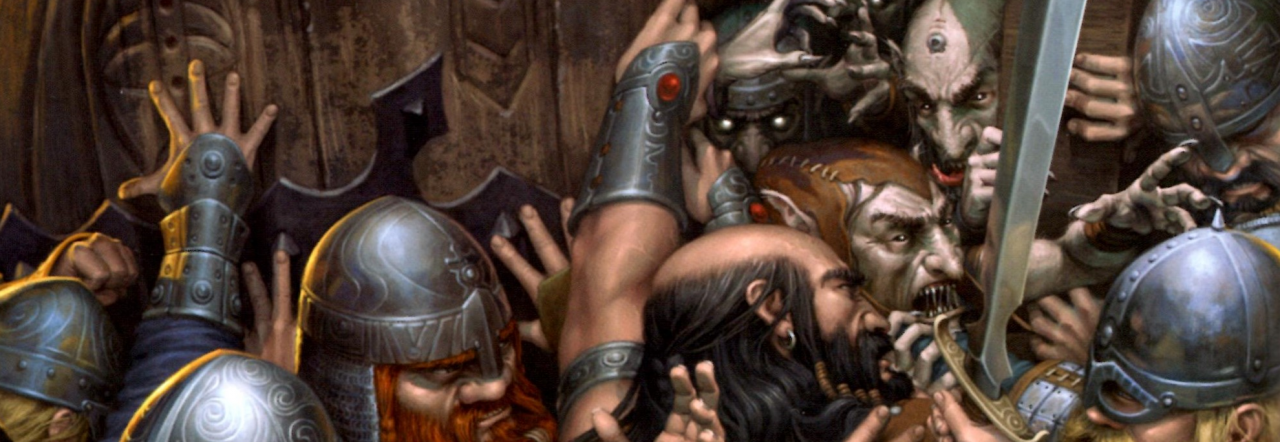
So the Italian author Umberto Eco died a few weeks ago. It was a big enough event to have made national news. I have never read the novel which made him famous, The Name of the Rose, and if I’m being frank, I’m not likely to. However, he is worth a mention from me here because his work as an academic and essayist has massively influenced my own choice of studies and professional interest, both as an undergraduate, and a post-graduate. I came across his work when I was asked to write an essay on medievalism and modern-medieval culture as an undergraduate. I, as anyone who knows me won’t be surprised to know, decided to write an essay on Dungeons and Dragons. What better way to sneak gaming into something real. My lecturer at the time insisted I make use of an essay by Eco. The essay was entitled ‘Dreaming of the Middle Ages’ in which Eco talks about the different ways that society reinvents the ‘middle ages’ for its own end. It was definitely interesting and for me, it set me down a path that for most of my time in education, I clung to.
So let’s add a few years. When I started my masters’ degree it was hard to

ignore Eco. In fact he was so relevant I referenced him in nearly every piece of coursework I did. For anyone wanting to have a good, insightful read about how the stories of our society are constructed, look to Travels in Hyper-Reality, which is the collection that ‘Dreaming of the Middle Ages’ comes from. It’s wonderful. I managed to track down a copy for myself a few months ago which alas wasn’t easy, partly to do with the fact I don’t think it’s in print anymore. His essays about what academics like to refer to as ‘medievalism’, that is the use of medieval tropes and things that are perceived as ‘medieval’ to create a narrative that people are immediately comfortable with. I suppose the modern, most relevant equivalent of this would be HBO’s Game of Thrones. Eco’s arguments were that things like Game of Thrones are not medieval at all, and instead use a mythologised version of the medieval to map modern thought and storytelling onto. Ergo, Game of Thrones is not medieval at all; it’s simply what we as an audience perceive to be medieval. Continue reading “Concerning Umberto Eco”
 Vault of the Geek