Concerning Ravenloft

So the new Ravenloft-based adventure Curse of Strahd for Dungeons and Dragons is set for release in just over a week release next week so I thought it might be a good time to look back over at the original Ravenloft module by Laura and Tracy Hickman. I am fortunate enough to have partner that tracked down a copy of the module and I received it as a Christmas present a few years ago. Hopefully this post will help explain to people a bit of the history of Ravenloft and how it fits into the bigger D&D picture. Beneath is a scan of my copy’s cover page.ravenloft

We can see that on the cover is Strahd, the vampire lord that features prominently in the upcoming module for 5th edition. He’s a Dracula type figure that has a tortured past and that was one of the things that made Ravenloft different. Previous to the publication of the module enemies and NPCs were simply in the game to give the players something to kill or to talk to. The Hickmans changed this; they made the villain the centre of the story. Strahd is the story in Ravenloft and that revolutionized the approach to adventure design. No longer could you simply have a series of unconnected rooms in a dungeon that didn’t make sense outside of itself. The characterization of Strahd as a villain helped peel away the wild and wooly adventure design of the 1970’s and replace it with something more meaningful.

So in addition to Strad what else have we got? We can see that the adventure is labelled as ‘I6’, meaning, for those unfamiliar with AD&D modules that it was the 6th adventure in the ‘I’ series. ‘I’ stands for intermediate, and it was mostly a series of unconnected adventures, though Ravenloft is one of the few within the series to get a sequel. We can also see that the adventure is intended for ‘6 to 8 characters of levels 5 to 7’. This reveals a difference in the game design culture and the understanding of how many PC’s would be in the game. I, along with most people who play D&D I presume would consider eight player characters quite a lot, maybe too many for some people. It reveals that, both the rules for AD&D were faster and simpler (well, I’d ague about simplicity…) and that life was cheaper back in 1st E AD&D.
Continue reading “Concerning Ravenloft”

Adventure: Snapshank Canyon

So this was an adventure I put together just after the release of the 5th Edition of Dungeons and Dragons. I usually document adventures like this on a personal wiki my group keeps and I thought it may be good to share with other people that fancy a quick, combat heavy adventure site to play, especially since the D&D 5th OGL has just gone live.

Snapshank Canyon

Snapshank Canyon is a small adventure site for first level characters. By the end they should either be 3rd level, or very close.

When they reach the canyon read the following description.

You have reached Snapshank Canyon. The gully entrance is fenced off by a high palisade and about the craggy hillside you can see several buildings that have been constructed, each connected by bridges. The entrance to the gully is watched over by a guard tower.

The players can approach this in many ways. The guard atop the tower has good visibility on anyone trying to enter. However, like many bandits he has a vice for ale and on an evening is often drunk, making it easier to sneak in. If he detects intruders he will sound the alarm, attracting the attention of people in area 1.

Continue reading “Adventure: Snapshank Canyon”

Concerning Painted Miniatures

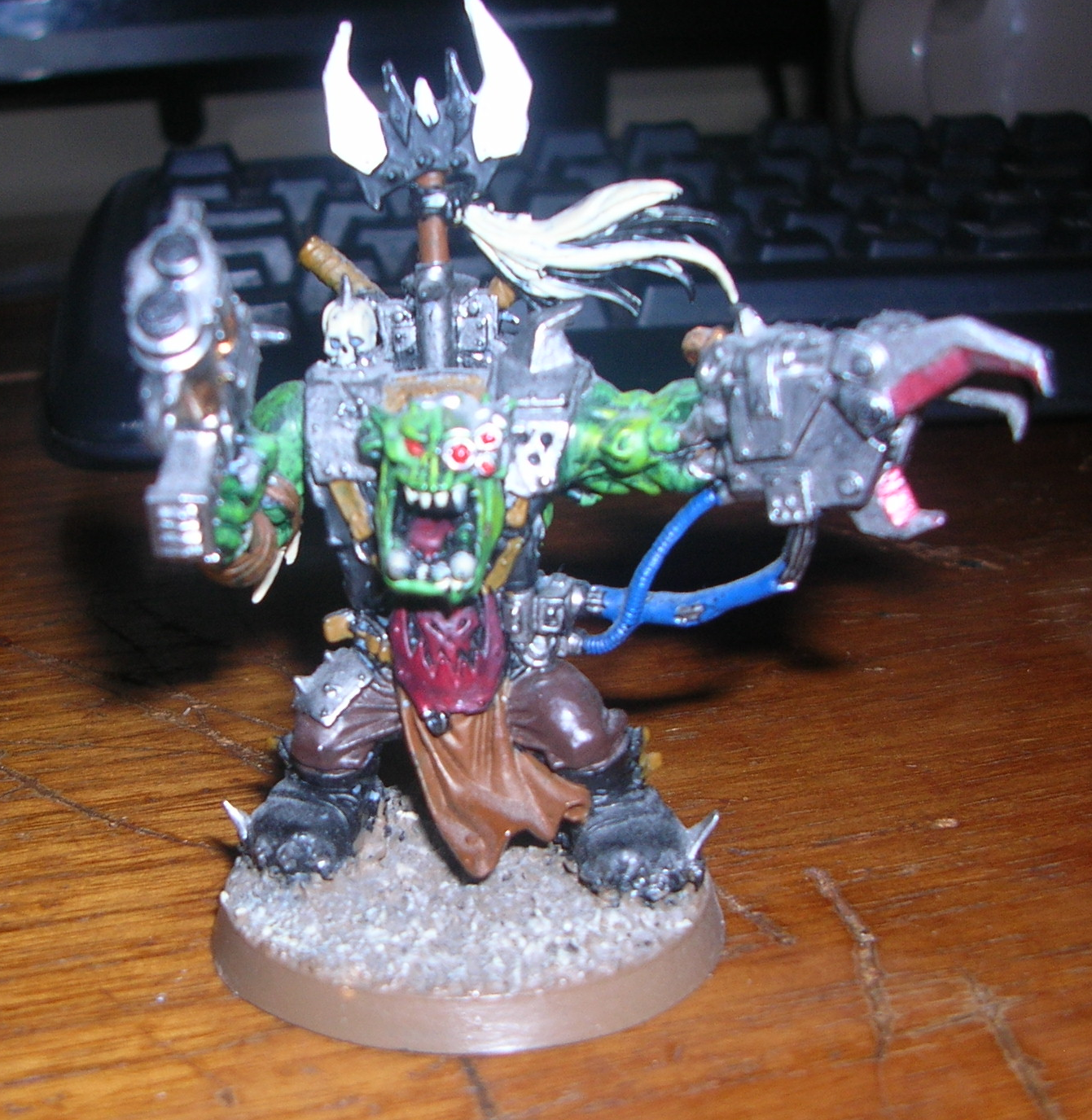
When it comes to painting miniatures I’ve always found that the world is divided. Some people like prepaints, I’m assuming that’s why Heroclix does so well, and some people like to paint them themselves.

Ever since historical wargaming people have collected miniatures and painted them, and with the surge in the popularity in games in the 70’s when Dungeons and Dragons was first released the beginning of the MegaCorp Games Workshop  began humbly selling small pewter miniatures for use with D&D, Traveller, and of course, HeroQuest.

GW eventually released Warhammer, and sequentially Warhammer 40,000; the biggest most popular miniature wargame. I’ll admit that the prospect of painting hundreds of plastic miniatures seems daunting, but I can never seem to be able to break away from the hobby, not just because of the gaming, but because of the collecting and painting.  One of the main appeals of the hobby is painting, because you are putting your thoughts and desires into the miniature and at the heart of it all, you want your army to stand out and not just be Ork army number 837, at least that’s what it is for me.

But at the same time, I’ll admit that painting is the scourge of the hobby; it’s repetitive and games that come with prepaints seem like a such a better idea, but time and time again it’s proven that the standard of the paint work done on prepaints is far below the standard you could do yourself. I remember my adolescent self and a several friends laughing our heads of at the mustache of prepainted D&D mini, because it instead looked like a sad face rather than a mustache.

Tannhauser, the boardgame comes with prepaints and on this sort of level it always seemed ok because you are only using a few miniatures and if I’m perfectly honest, despise the fact that I feel I should paint my unpainted Super Dungeon Explore and Talisman figures simply because they’re unpainted.

I find that unpainted miniatures for a boardgame is fine; nobody cares, but as soon as someone turns up to the table with an unpainted Cygnar force, people begin to take note. There is no reason for that. Game on. Paint or no paint.Image